2021
Stuck

Are we stuck?

How do we understand the time we are presently alive in; is an age-old question. We havedifferent yardsticks placed in order to asses and understand contemporary times. Many ofthe tools we use to analyze time are the notions of memory, history and the change in climate or weather patterns. Human behavior and its tendency to act in response to various calamities is one of the effective ways we use to think highly about ourselves. 'Humanity: a human drafted word has been very sightlessly used to differentiate our•unique way• ofsympathizing with fellow humans and extend it to the other species who have survived thousands of years of human evolution. But recent studies in psychology and other scientific areas of research have been undergoing a shaking shift in the manner in which we have understood time, reality, natural resources, world order and pandemic. There is an unpredictability stored for us in the immediate future. We no longer hold a lantern that directs us through the darkness of the past, present and the future. A posthuman understanding has evolved with uncertainties of various kinds which no longer support a single version/vision of the human world view.

There is an unsettling condition which is brought by the pandemic to reconfigure the reality we live in. A situation where our own existence is on shaking grounds. A prolonged sense of being nowhere along with the hope of'things will be alright' in a few weeks or months. The physical stagnation propelled the mind to wander for a time being, and then stooped into an array of depression which has not been experienced in the 'stable human condition' since a very long time. With an unstable mind we are witnessing changing ecosystem, shocking political indifferences and various mutations of the same virus. Are we stuck because of the manner in which we have conceived or articulated our world? Or are we stuck because of how the ecosystem responds to our age-old attitudes towards all the lifeforms surrounding us?

Medium: Bronze with mechanical devise | Size: 75.5 x 15.5 x 13.5 inches


2018
Citizens

Medium: Bronze | Size: Height: each 18 in


2018
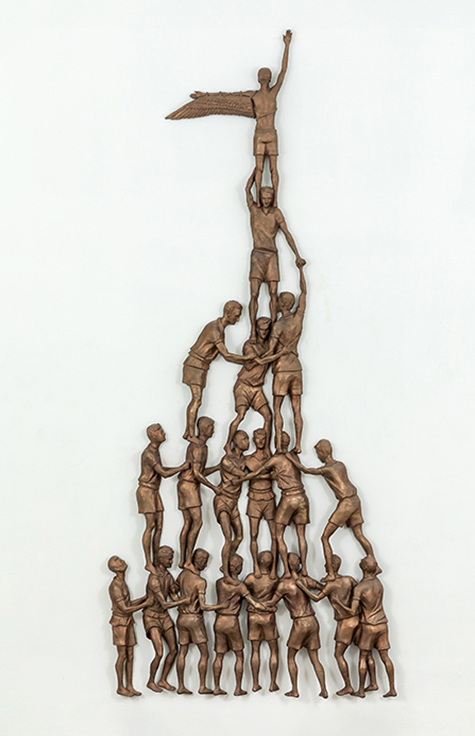
Human Pull

Medium: Bronze | Size: 96" x 41 • x s.s• 2


2018
Hesitant Attempt

Medium: Bronze | Size: l0S"x 2S"x 25"


2018
Touch me not

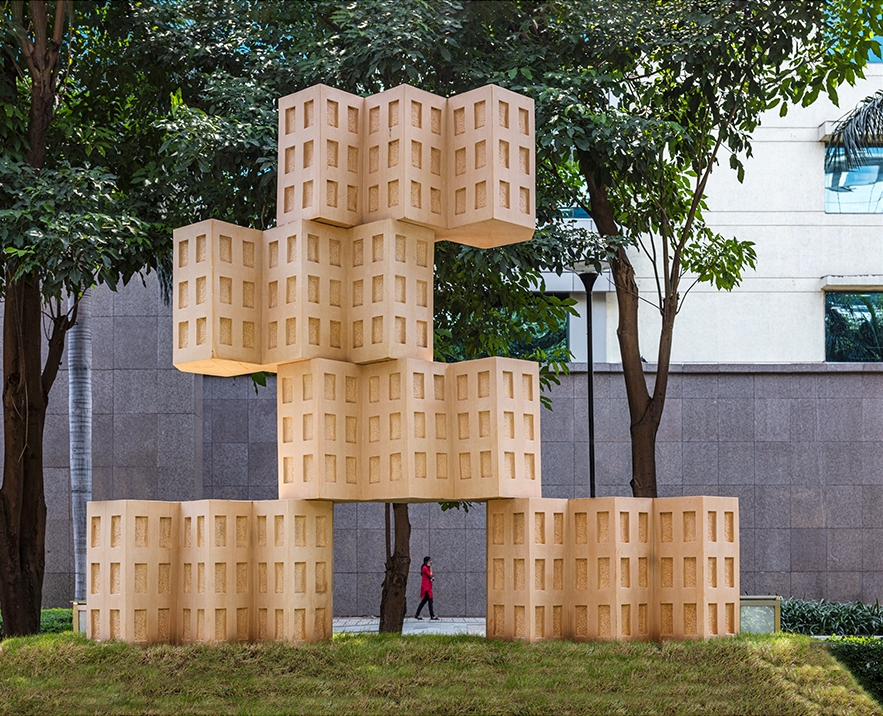
Medium: Read sandstone | Size: 132 x 127 x 32 in


2018
Lost and found

Medium: Bronze & marble | Size: 27 x 17 x 11.5 inches


2016 Laumeier Sculpture Park I USA
Wood henge

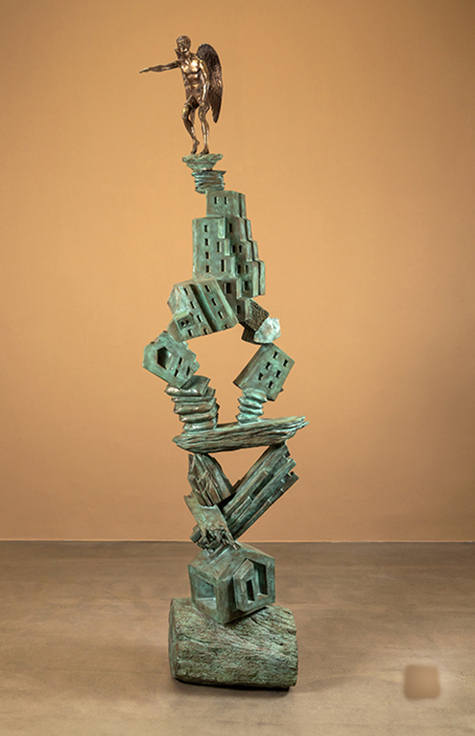
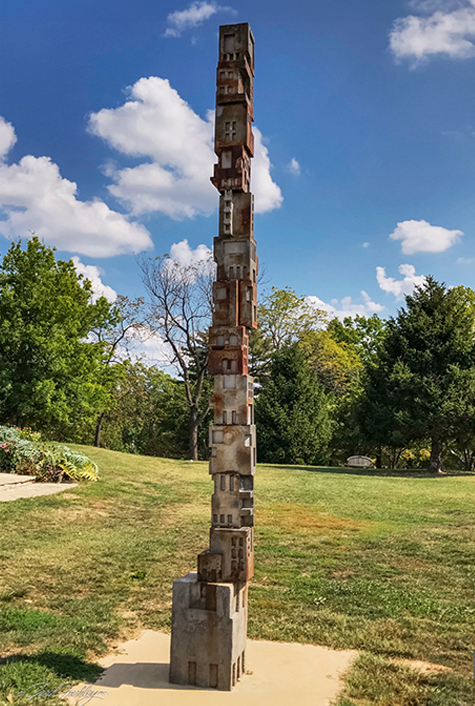
Inspired by a site visit to Cahokia Mounds State Historic Site two years ago, Scaria's Woodhenge, 2016 refers directly to the speculative theories about the collapse of the Mississippian civilization that was abandoned by the mid-13th century. Scaria surveys various icons of de industrialized landscapes and the comparatively new Indian trend toward suburban sprawl. The work is inspired by the migration shift and community collapse in St. Louis' own history and current day New Delhi. The physical erasure of the remnants of the pre-historic, archeologically distinct community around Cahokia is comparable to the destruction of areas in New Delhi. Industrial-scale developments are uprooting old communities with a long folk history, destroying the "unaesthetic" architecture associated with it. This becomes the subject and object in Scaria's hands. Made up of maquettes of disappearing Delhi domestic spaces, meticulously carved in wood, stacked on top of each other, then cast in steel, Scaria's version both vertically maps the reckless civic decisions and illustrates the beauty in simplistic urban domestic habitats. This totemic sculpture stands as a monument to the building of a civilization past and as an illustration of historic and contemporary social and cultural shifts.

Special thanks to Jim and Vicki Reid of Midwest Precision Casting Co.

Medium: Stainless steel | Size: 192 x 12 xl 2 in each


2016
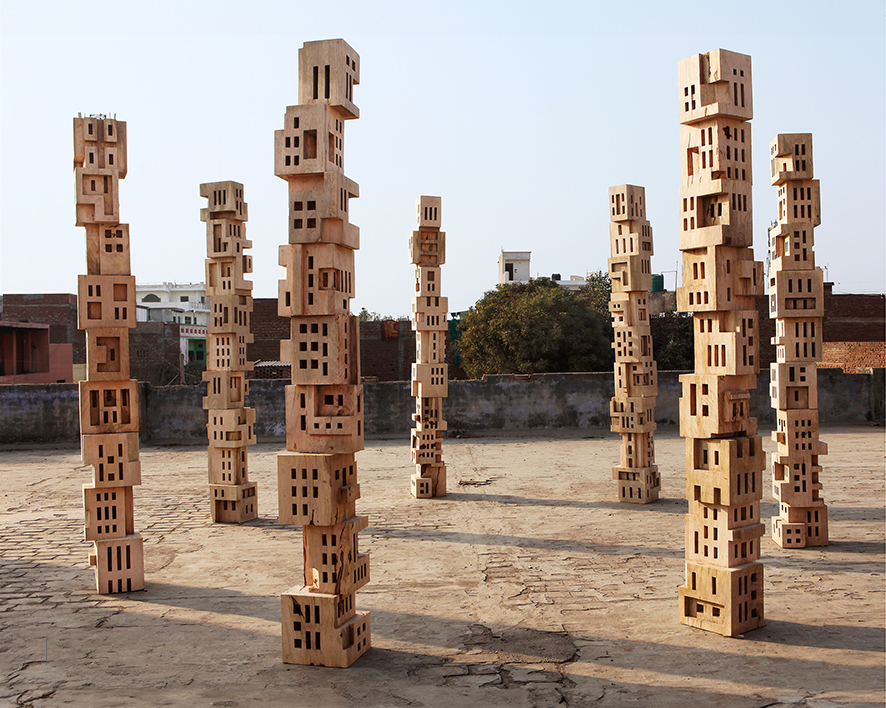
Woodhenge

Medium: Wood | Size: 108x 12 x12 in. each


2014
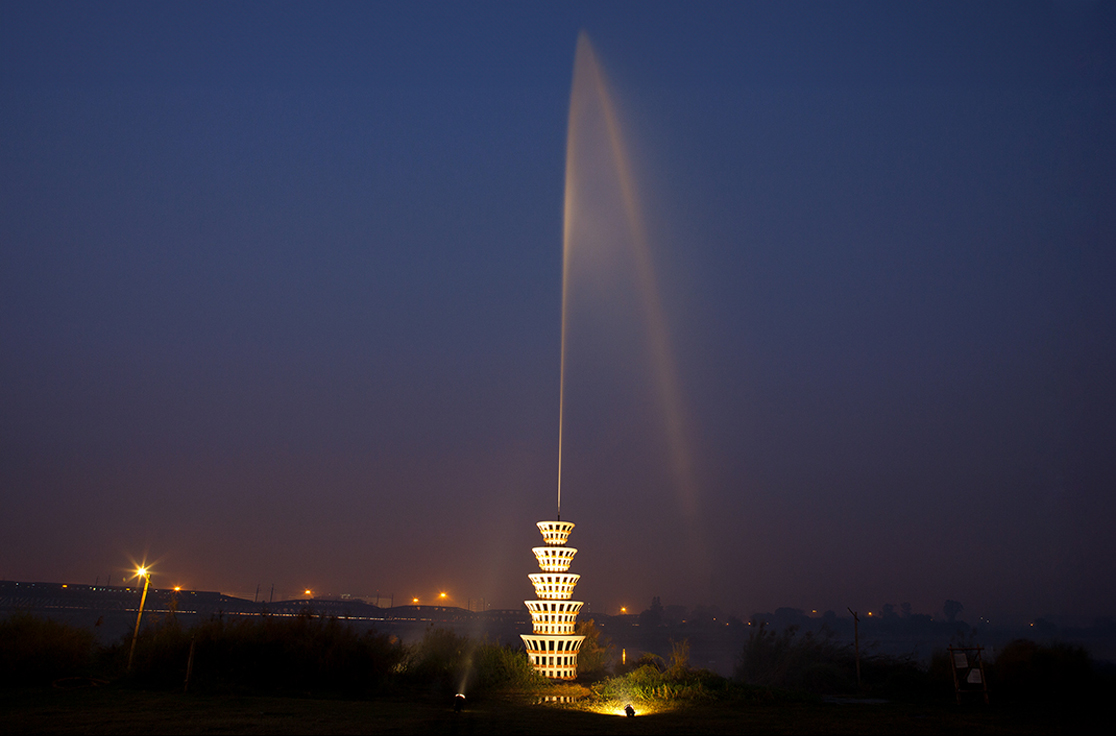
Chronicles of the Shores Foretold

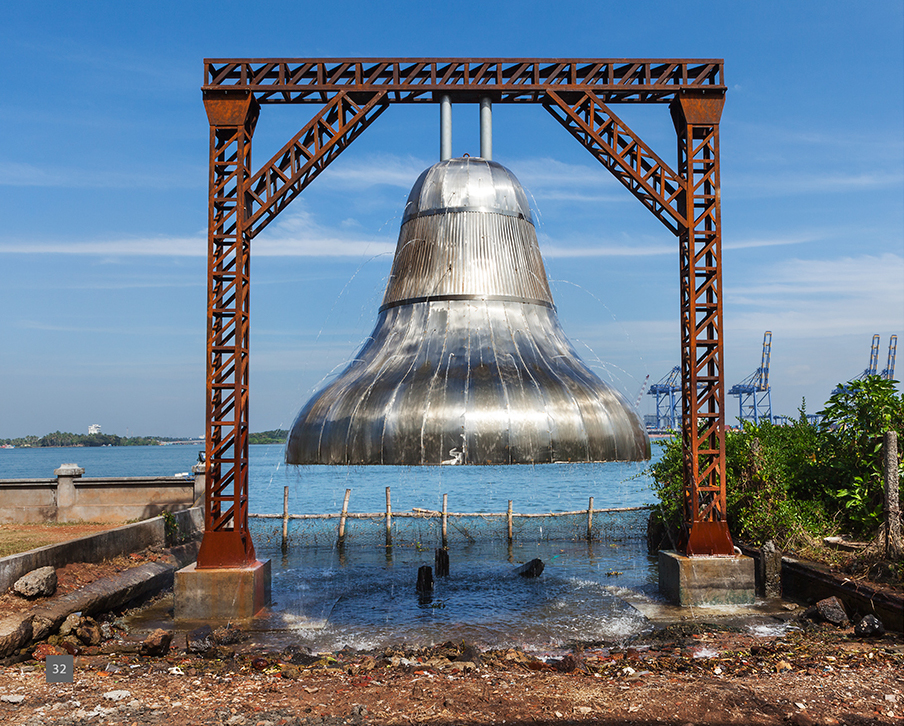
Chronicles of the Shores Foretold is a site-specific work by Gigi Scaria in which a giant elevated bell on the shore spouts water from the backwaters nearby. According to Gigi, the bell has universal significance as a marker of time and mortality, but is also symbolically important for Kera la's Christian population, their rituals and folklores. By puncturing this cherished symbol with holes, Scaria seeks to symbolically puncture cultural time and memory.

Text courtesy: Gallery Chemould

Medium: Stainless steel I motored pump system and water | Size: 92 in. diameter from the bottom, 90 in. diameter at the top, 156 in. height


2013
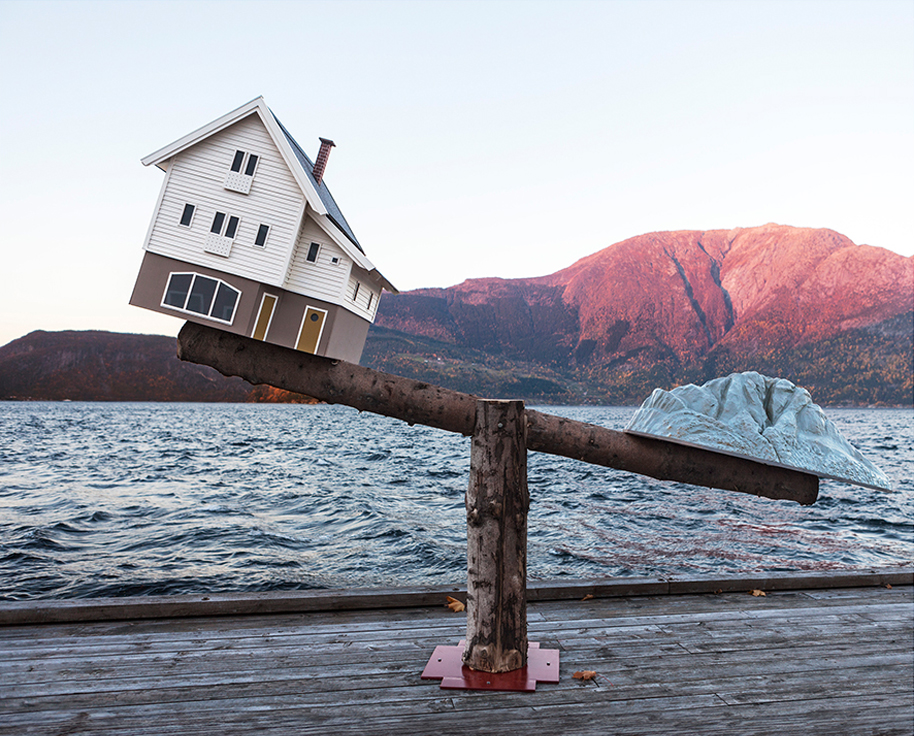
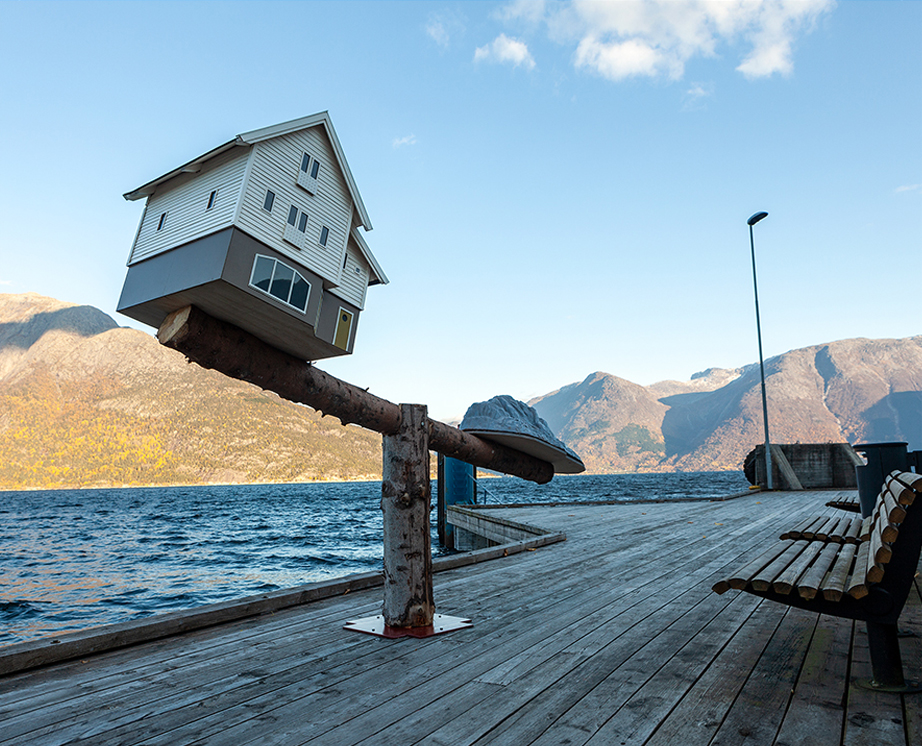
Look up -Look down Sculptural installation (Realized in Norway with a local carpenter's help)

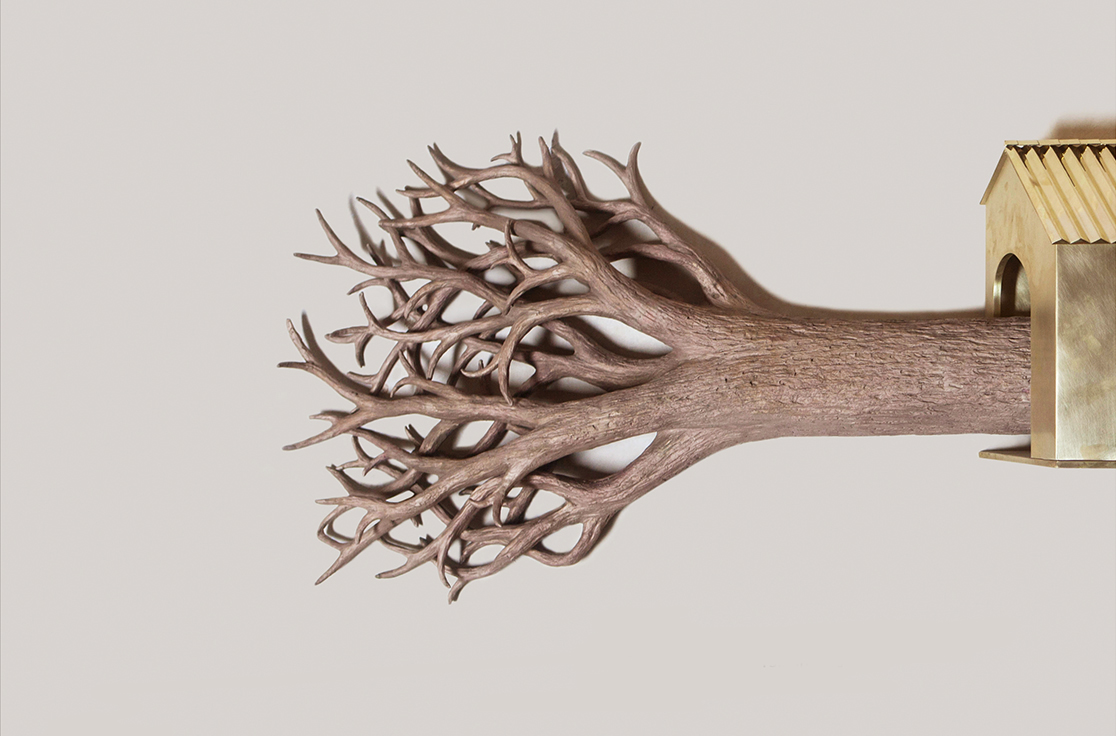
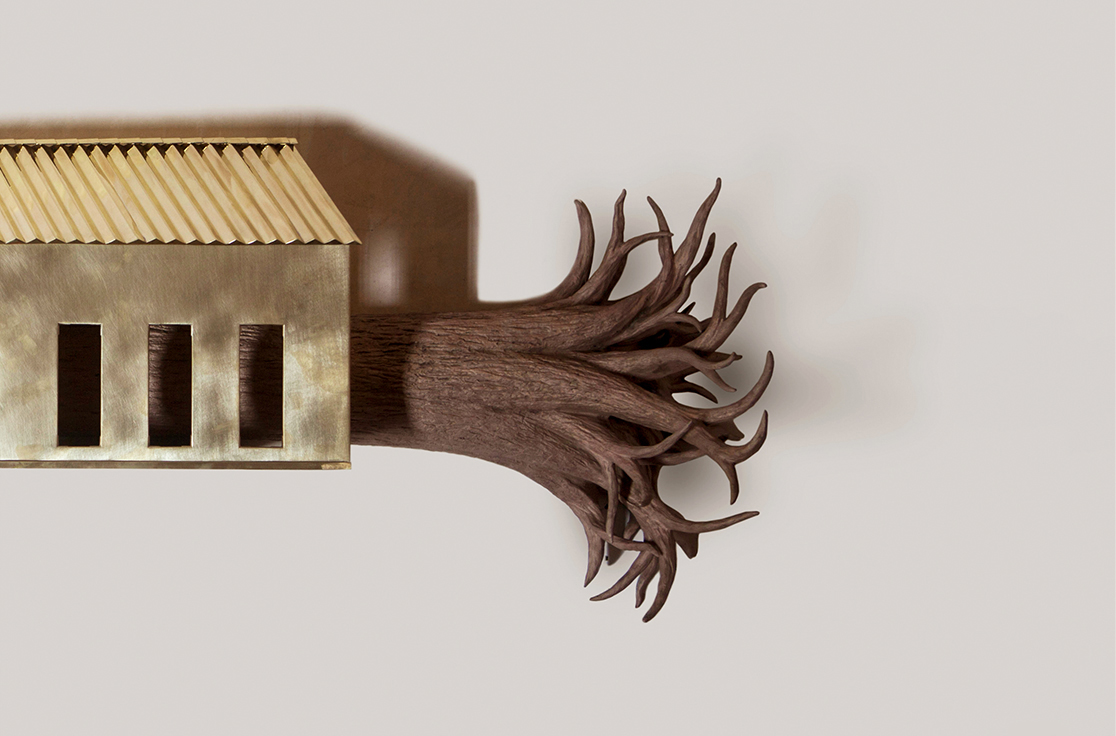
The act Of balancing each Other's position is completely dependent upon the pressure one puts to one's own side. If the pressure is maintained by keeping the strength of the other side in mind, the play will continue. The lack of understanding of the other Side Will make one Stuck in a disproportionate position forever. When the movement stops in a disproportionate position, balance becomes an unaffected truth. Where there is no equation, the Vision blurs. There 'See' and •saw' lose perspective.

Utne/Norway

Medium: Wood, glass, concrete, iron and paint Dimensions: House- 37 x 32 x 32 in | Size: Mountain- SO x 18 x 25 in Wood log- 118 x 10 in Size Wood base- 39 x 12 in


2012
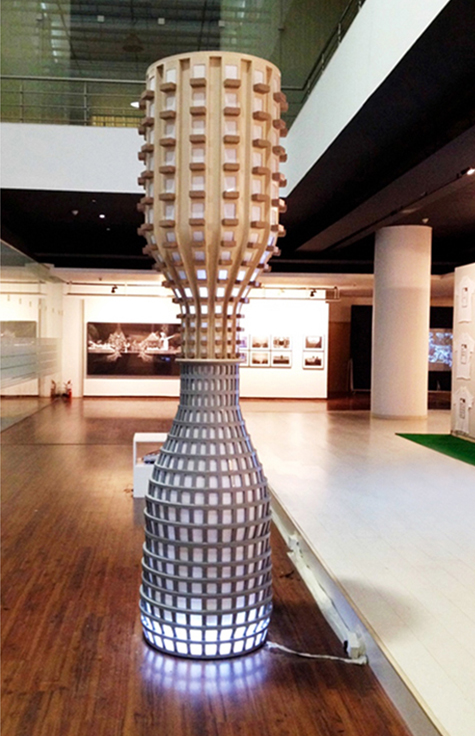
Bottled

This sculpture deals with the complex narrative of architectural space, vacuum space and a moving liquid which symbolizes the fluctuating human existence. As these are two bottles put together it also appears as an hour glass and the light passing from one bottle to another creates the impression of melting time. On another note it also reveals a laboratory of an alchemist, whose painstaking experiments formed a liquid which pulsate in the soulless 'urban arcade'.

Medium: Steel | Led lights| Acrylic sheets | Microcontroller | Paint. | Size: 144" height x 36" dia,


2011
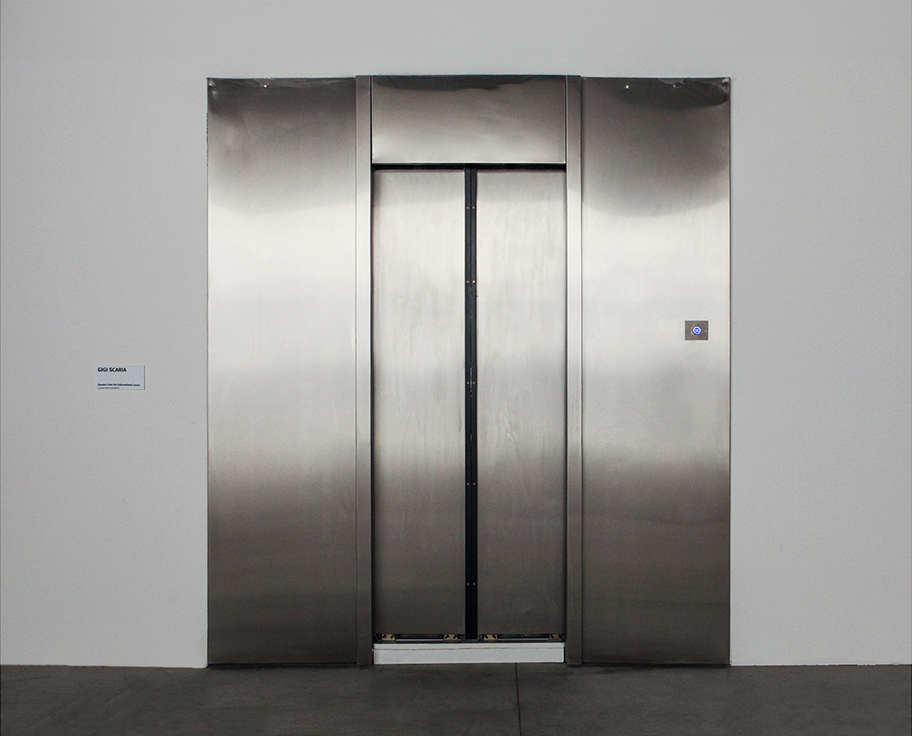
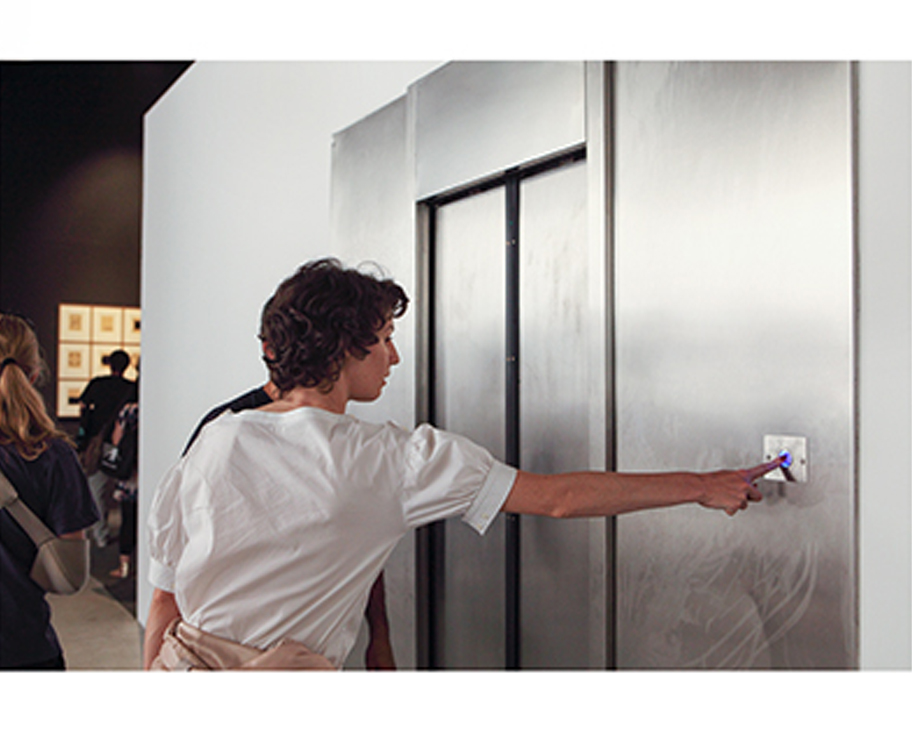
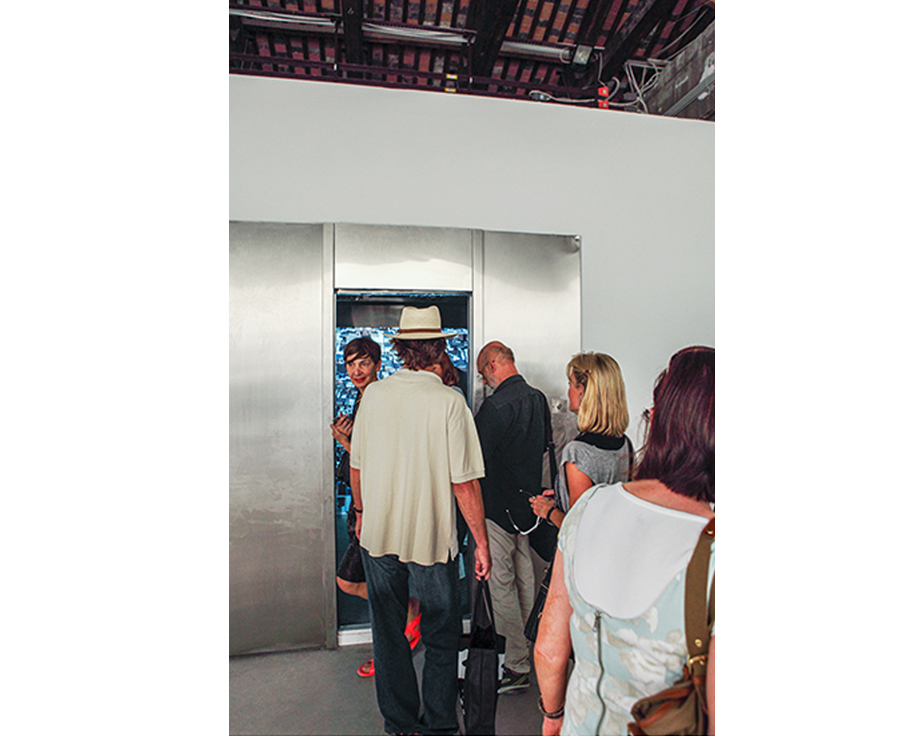
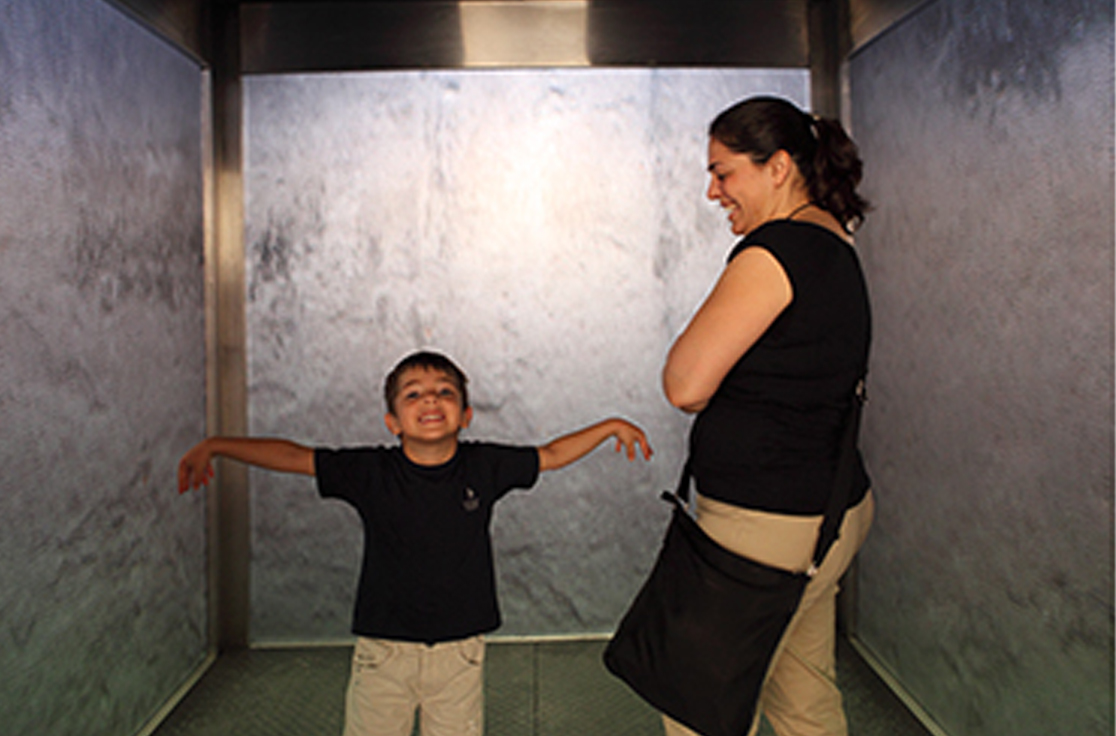
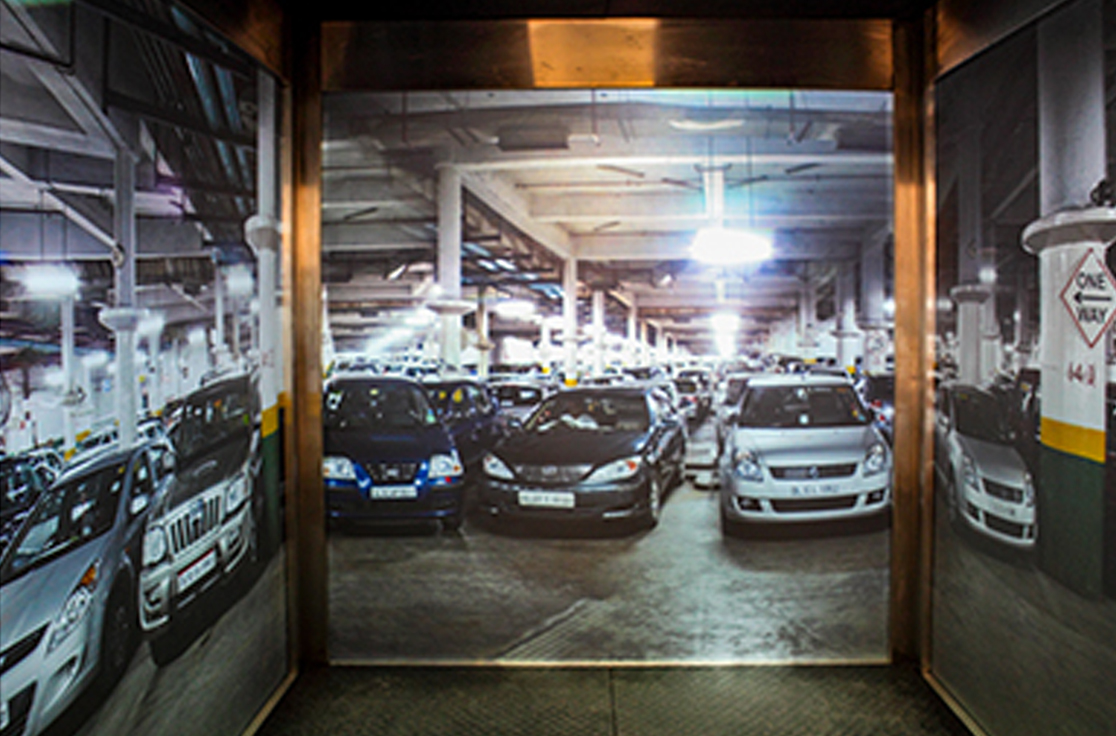
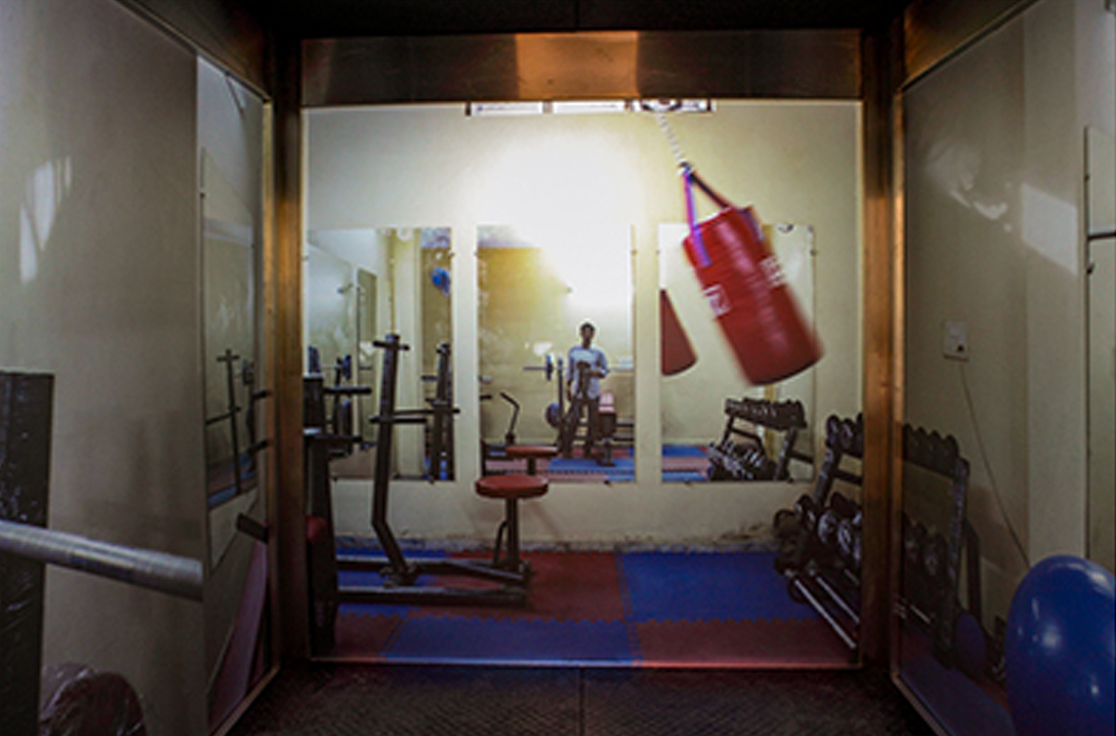
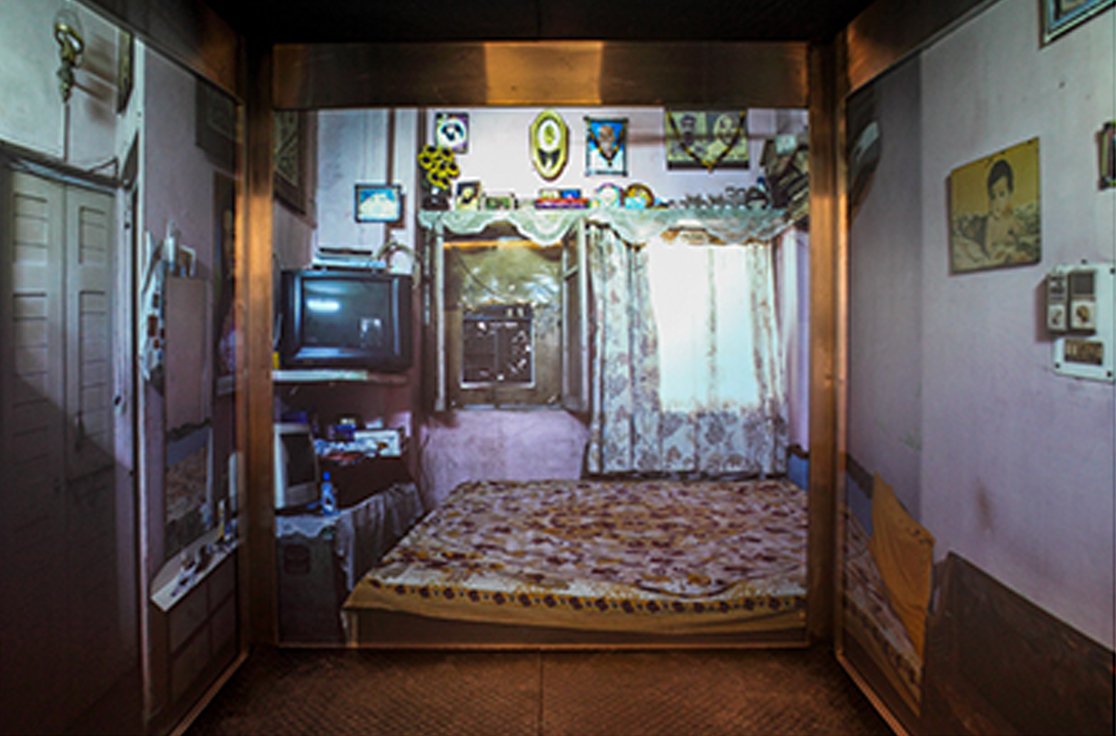
Elevator from the sub continent

Medium: 3 side projection and 1 side elevator door syste | Size: 84 x 96 x 108 in


I have been engaged with the city of Delhi since last 18 years. Observing and engaging with Delhi on a permanent day to day basis has formed much of my perception of urban spaces in India. The layers of social structures and hierarchies one encounters in a single day in Delhi leaves thought for the understanding of a much larger and wider notion called 'India'. The urban and the rural, the class and caste, religion and practice and the endless list of eccentric and idiosyncratic exchanges of different social groups somehow creates its own mystery in any urban space in India. For us 'modernity' is a big claim, which has to be approved and contextualized at every stage of any discourse. On the other hand an economically booming India stands with millions of middle class on its side, which constantly erase and redraw the map of India with a completely different set of tools and calculations. The repercussions and resonance of these new voices has also been woven into the urban fabric with a variety of architectural and cultural forms.

Many of these observations have been a catalyst for the making of the Elevator from the subcontinent. It is a bit larger than a normal sized elevator cabin with an automatic door system. When you press the button, the door opens and inside the elevator you witness three backlit projections. Then the door closes behind you and images on all the three projections around you create a car parking basement. Slowly the parking space moves down, giving you an illusion of going upward in the elevator. Then it reaches the next floor, which is the interior of a middle class household. Thus the elevator travels through different levels, each one displaying a different living space. These living spaces can be identified as different social stratas and hierarchies. The duration of the ride is about 10 minutes and finally one comes back to the car parking space and the elevator door opens.

The elevator has a symbolic significance when we think about the logic in which it makes up and down movements. Elevator is a sculptural version of a progressive logic imposed by the state on its citizens. According to its structure, progress comes with linearity and its vertical fa􀀥ade. In this work an attempt is made to break the structural logic of the space by viewing the living spaces in horizontal layers thereby creating vast spaces of parallel existence.

In another sense the layers of vision blocked by the walls get illuminated by each spectator while experiencing the elevator.


2012
Wind Chime

Scaria’s practice - often manifesting in sculpture, photography and film - explores his interest in issues of urban development, particularly issues surrounding migration, economic development and urban architecture. Recent works have been described as ‘absurdist environments of the future’, a description appropriate to Wind Chime. This new work - commissioned for the -Brewster’s current exhibition Sub-Topical Heat: New art from South Asia (14 July - 4 November 2012) - is representative of international practices engaging with issues of globalisation. Photographs of buildings in New Delhi were taken, reimagined by the artist in three-dimensional form and fabricated in Taranaki from aluminium. Suspended as part of a large rotating mobile or wind chime structure, these reimagined pieces of architecture forge a provocative statement of personal experience, the politics of environment and the immutable paths of social and urban change. Wind Chime is a work of considerable significance. While the Gallery has shown leadership and vision amongst New Zealand’s art galleries, collecting the work of artists from the wider Asia-Pacific region, the modern political climate and the overwhelming state of globalisation has both widened the breadth of our audience’s vision and narrowed the boundaries between artists and their respective geographies.

Aluminium sheeting, mirrored Perspex, wire cable, motor | 3352mm x 1194mm x 1194mm


City Unclaimed

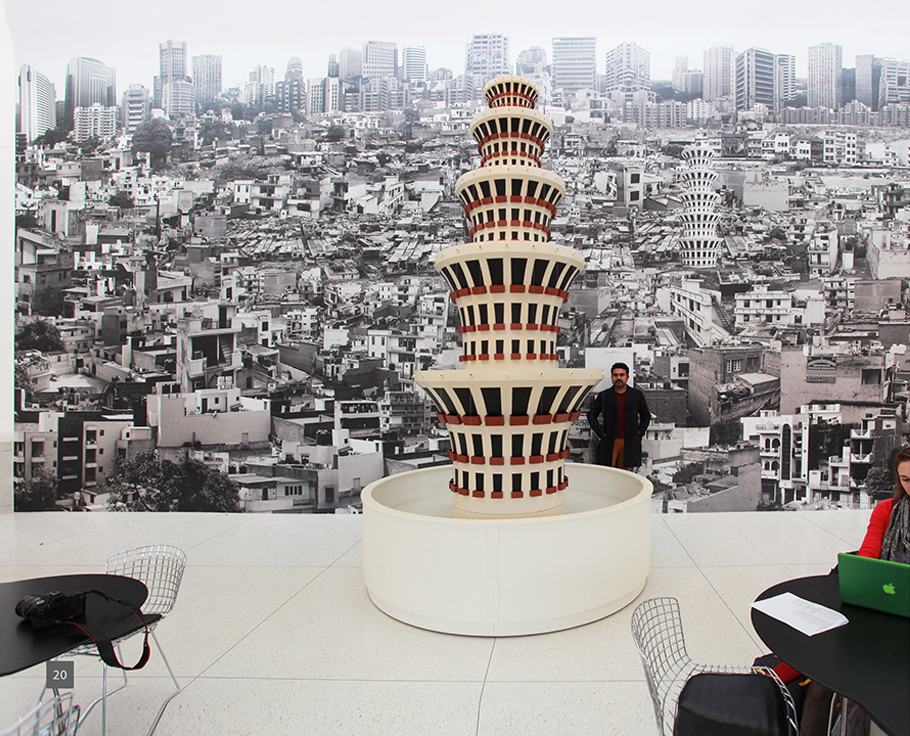
City Unclaimed Revealing the complex layers and stark contrasts of Delhi, Indian artist Gigi Scaria's site-specific installation City Unclaimed combines a large photo-based mural of an imaginary cityscape with a working fountain that stands as both a monument to a glorious past and also a reminder of bubbling societal tension. Covering the central wall of the Smart Museum's reception hall, the immersive mural is manipulated and stitched together from photographs Scaria has taken around his home city of Delhi. The collage of images shows the extreme differences and layers of social and economic class that are characteristic of the city, which Scaria says "grows and decays by its own logic:'

In front of the mural stands a twelve-foot high fountain that mirrors the architecture and images behind it. The five tiers of the fountain resemble Delhi apartment buildings with windows and balconies, and the flowing water raises issues about scarcity, abundance, and the allocation of resources in urban spaces.

City Unclaimed is the artist's first project for a U.S. museum.

Text courtesy: Smart Museum of Art, Chicago


2011
Fountain of Purification

Medium: aluminum | aluminum fabricated sheet | water pump I paint | Size: height 288 | diameter at bottom 120 | top 72 in


2011
Steps To Predicament

Medium: aluminium fabricated sheet | mirror glass | steel pole | paint | Size: 59 in (diameter) x 200 in height


City Beats

2010
Who directs whom? A sculptural installation proposal.

The installation 'Who directs whom?' is an attempt to understand the urban psyche in connection with the modern concept of time and its influence on social behaviour. When our actions are set by the movements of the clock, we tend to forget the idea of time as a cultural paradigm. When a city pulsates by it's clock, it shuts its eyes towards the layers of parallel times, which are very much a part of our creative existence.
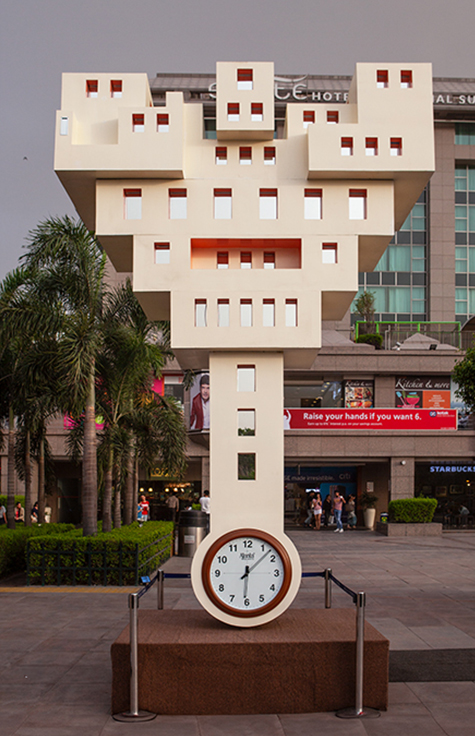
Medium: Aluminum structure, aluminum-fabricated sheet, Mirror glass, 2 Clocks, Motor, Iron Sheet, and Paint | Size: 180 x 120 x 72 in


2010
Fluttering Cultures

When we travel, it is not just the personal belongings which travel with us. It is the nation; the culture and the unique perception of ones own self which travels along with. Therefore a traveler is not only a person who has business aspirations but also a person who carries his or her cultural heritage and imagination that contributes to develop a new culture wherever she or he goes.

Medium: Aluminum fabricated sheet, mirror glass and paint.
Size: 19 feet x 15 feet x 5.5 feet


2010
Settlement

These sculptural installations are a part of the site specific interventions I did during the last 3 years in Delhi. I have conceptualized and created this apartment structures in response to the current construction fever in the city.

Demolition and the reconstruction of the cityscape is quite a common seen in many of the Indian cities. When it expands beyond the peripheries of the city, we have to come to term with the fact that peripheries don’t exist any more. I have placed these structures in the outskirts of the city and took photographs of them with the location around. By adding these structures to the site my intention is to hint the inevitable make over of the site in the immediate future. At the same time the documentation of the site with an architectural input gives a character to the site which could be one among the million possibilities when it will actually get transferred by construction. The sculptures on the other hand reflect the present social realities with a pinch of sarcasm and irony.

Medium: wood & mirror glass


2009
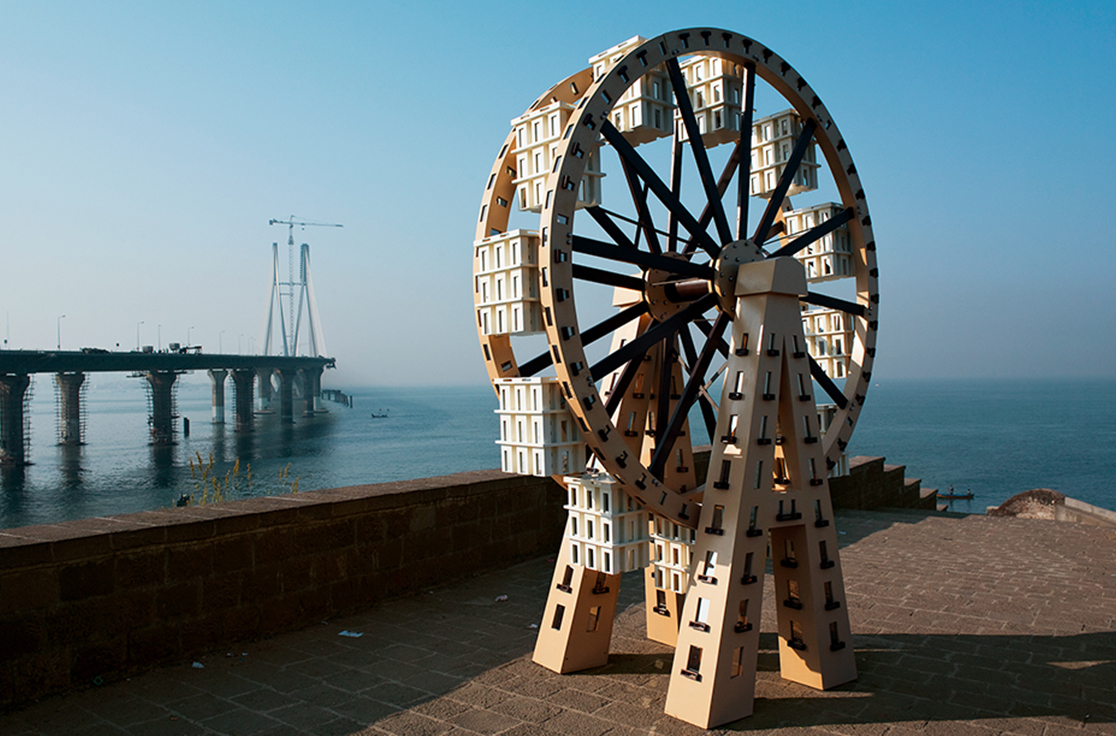
Wheel

Medium: wood, iron, mirror, glass, motor and paint | Size: 144 x 108 x 54 inches


2008
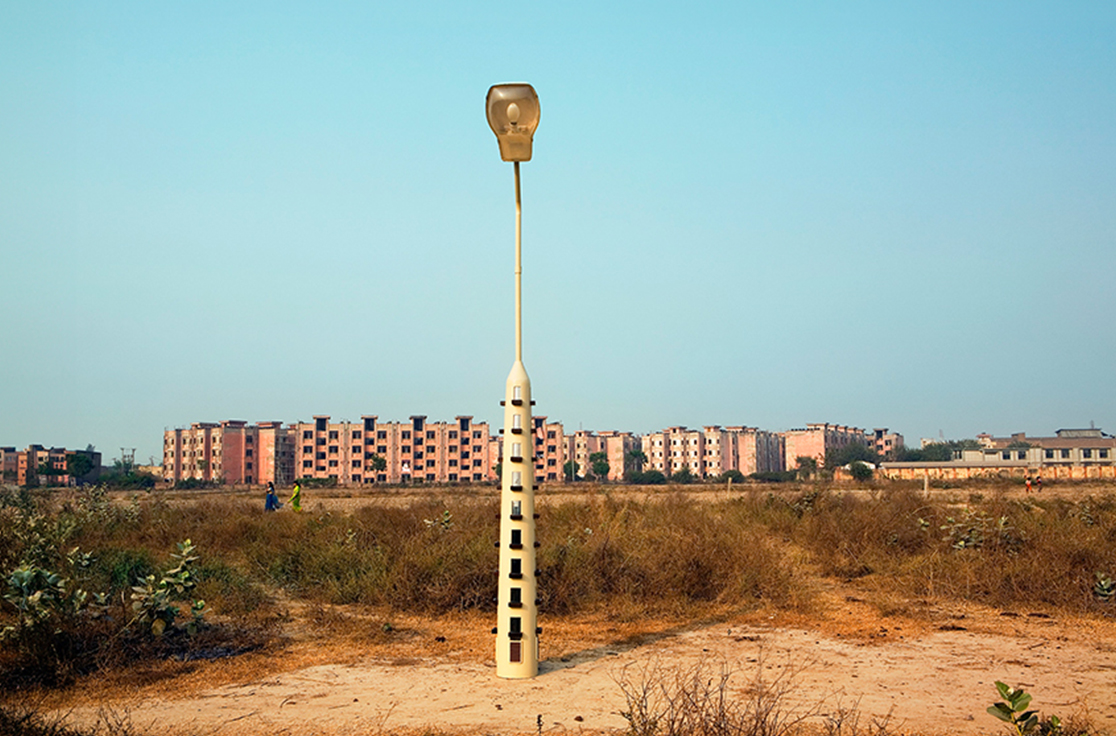
Highlight

Medium: Wood | iron and light box | bulb | Size: Height: 84in bottom: 12in diameter


2008
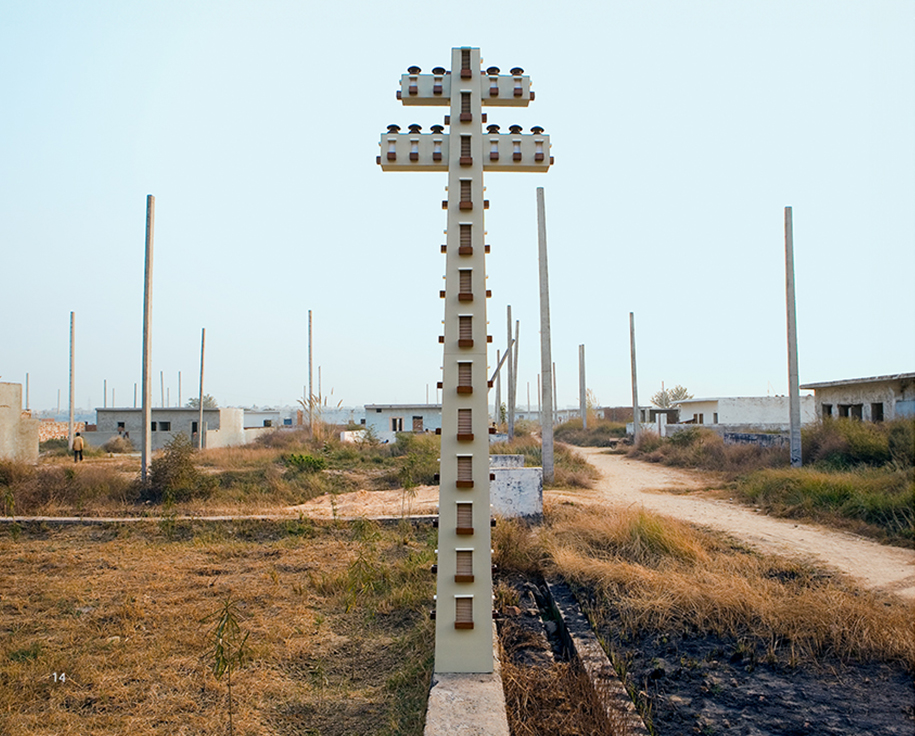
Post land

'Post land' is an Electric pole with apartments in. The work deals with urban contradictions, as well comment on the living conditions of the people in the 'world' in transition. The idea of this work first struck me when I saw a colony with hundreds of electric poles in suburban Delhi, without electricity. I made the sculpture and took it to the site and placed it among the poles and snapped shots. The viscerogenic needs of human beings are combined in a solo form - the electric poles. The work depicts the ambiguity and concerns of the future, urban bred generation, which will have to shrink itself, as it accommodates itself to the ever-escalating scarcity of land and related resources.

Medium: wood | light | mica sheets | Size: lS0x 14x4 in Year:


2007
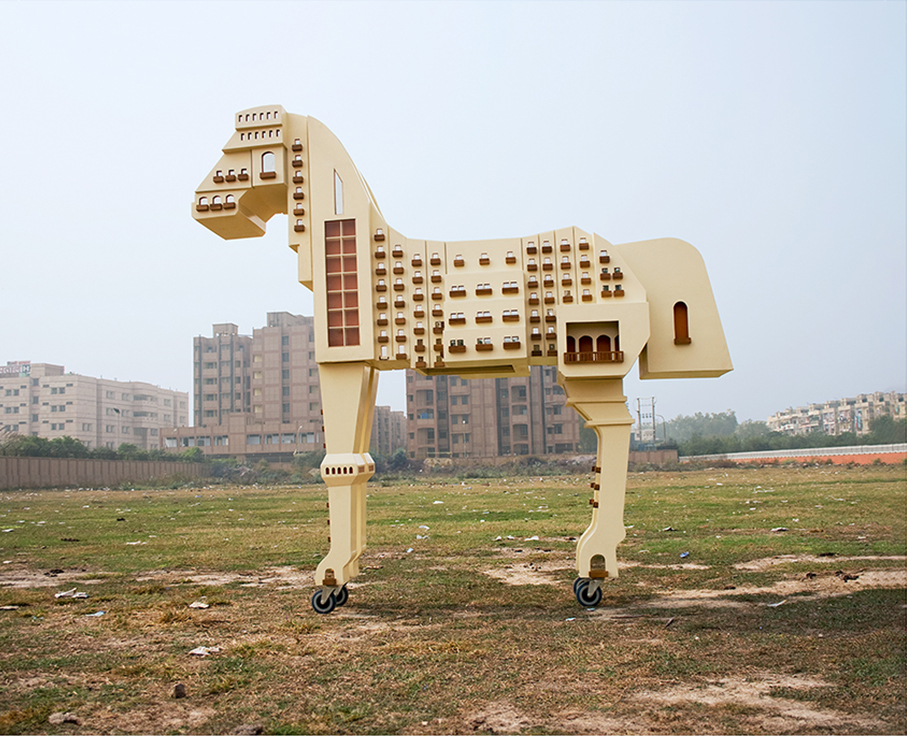
Someone left a horse on the shore

This is a large -scale sculpture made of wood. The idea of the Trojan horse is to narrate the present-day urban re ality. After it was made, the sculpture was taken to different locations on the outskirt of the city Delhi, and was photogra phed with the surro unding landscape. It was a comment on the every day expansion of the cityscape with the force of huge land mafia network in the city. A betrayal and conqu est in contemporary times.

Medium: wood, mirror gl ass, small whe els and pa int Size: 120 x 84 x 36 in


Through a glass darkly
toparrow